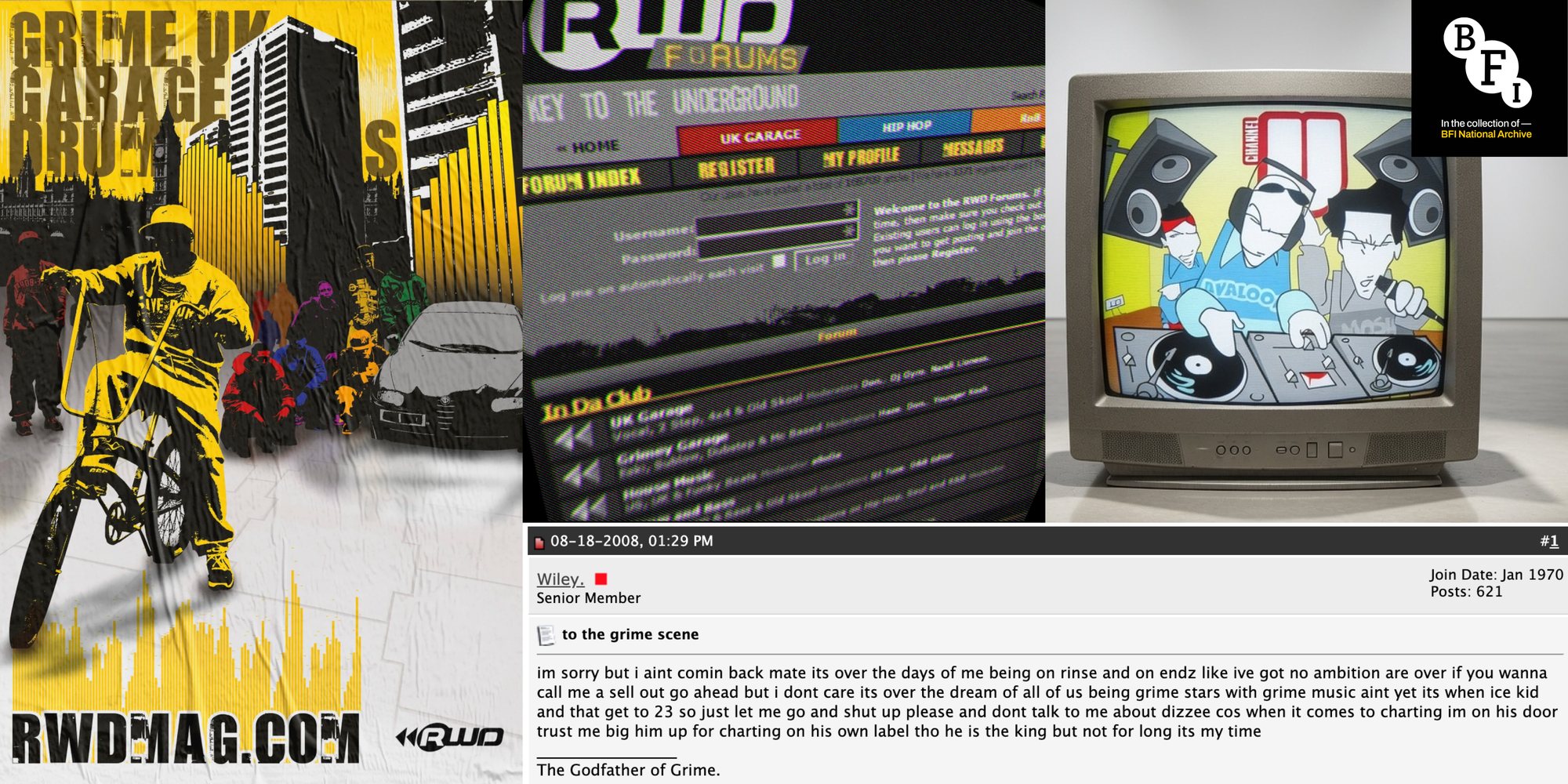
Before GRM Daily, before SBTV, before YouTube — the place the music actually lived first. A bedroom website that became the first online home of grime, and put the sound on the internet when nowhere else would.
Act One — The origin
01c.1999–2002 · The bedroom
Putting the sound online, first
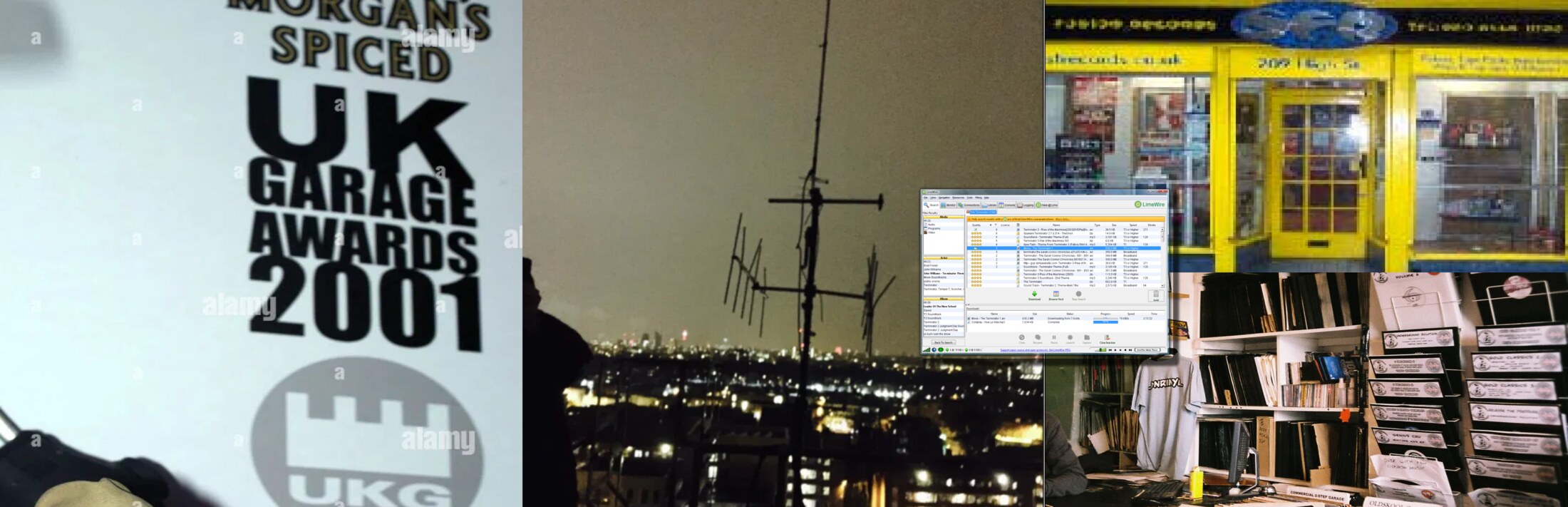
It started in a bedroom with pirate radio and a dream of getting the music online. In the Napster and LimeWire era, I ripped vinyl to MP3, taped pirate-radio sets and uploaded them — some of the first to push UK garage and its offshoots onto the internet at all. Badly documented, but it happened here first.
The look, before there was a business to put it on.
The first site, uk-garage.co.uk, was a fan site — and it won a UK Garage Awards Website of the Year. Validation before there was a business, and the thing that brought record-shop clients and, eventually, RWD: a magazine with one print issue, no website, no email. Alongside it, flyer work for So Solid Crew — Delight FM and their Garage Delight events — the same scene, on paper this time.
Pirate radio, London, ripped vinyl, and the UK Garage Awards — Website of the Year, before RWD existed.
022001–2004 · Building RWD
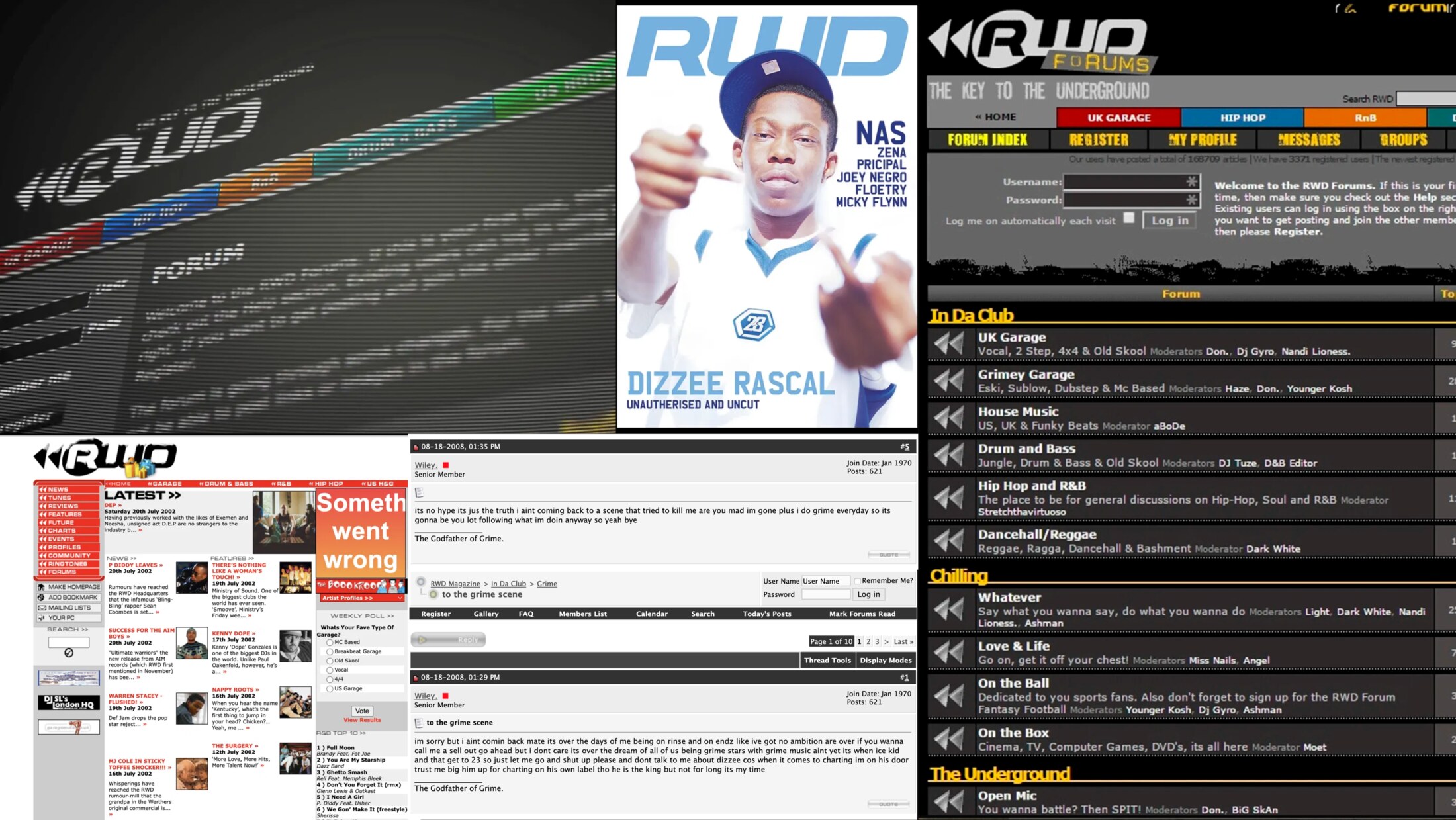
The key to the underground
I hooked up RWD's email and built its website from nothing. The RWD Music section held the early grime tracks — vocal and instrumental — that producers sent us first, before YouTube existed. People came to listen, and worked out how to rip them however hard we hid the files. Within its first year it grew from 20,000 to 850,000 monthly users, becoming the largest urban music platform in the UK. It won the UK Garage Awards 2002 for Best Website.
RWDmag.com and the RWD Forums — the key to the underground.
What the site became was the forum — the real key to the underground. Wiley, JME, Skepta, Rebound X and the rest of the pioneers were users. It is still what people ask me about: Wiley's legendary posts, and the "where is Rebound X" mystery that has never gone away.
"Grime had always been a conversation and he understood this." — Matt Mason, This Is Grime (Hattie Collins)
"im sorry but i aint comin back mate its over… dont talk to me about dizzee… he is the king but not for long its my time"
Wiley — "to the grime scene", RWD forums, 2008. "The Godfather of Grime."
Act Two — What it did to the culture
03Design
The visual language of the scene
Beyond hosting the culture, I gave it a look. Record artwork and campaigns for the artists coming up, the first RWD covers to feature Dizzee Rascal and Skepta — Dizzee on the front when he was still on Xtreme Talent — and the first Roll Deep advert. The early design feel of grime and garage.
Record artwork and campaign design — Artful Dodger, PD Syndicate, and adidas' "About to Blow," featuring Tinie Tempah.
04Overground
The Booo Krooo, Missy Elliott, Channel U & a royal commission
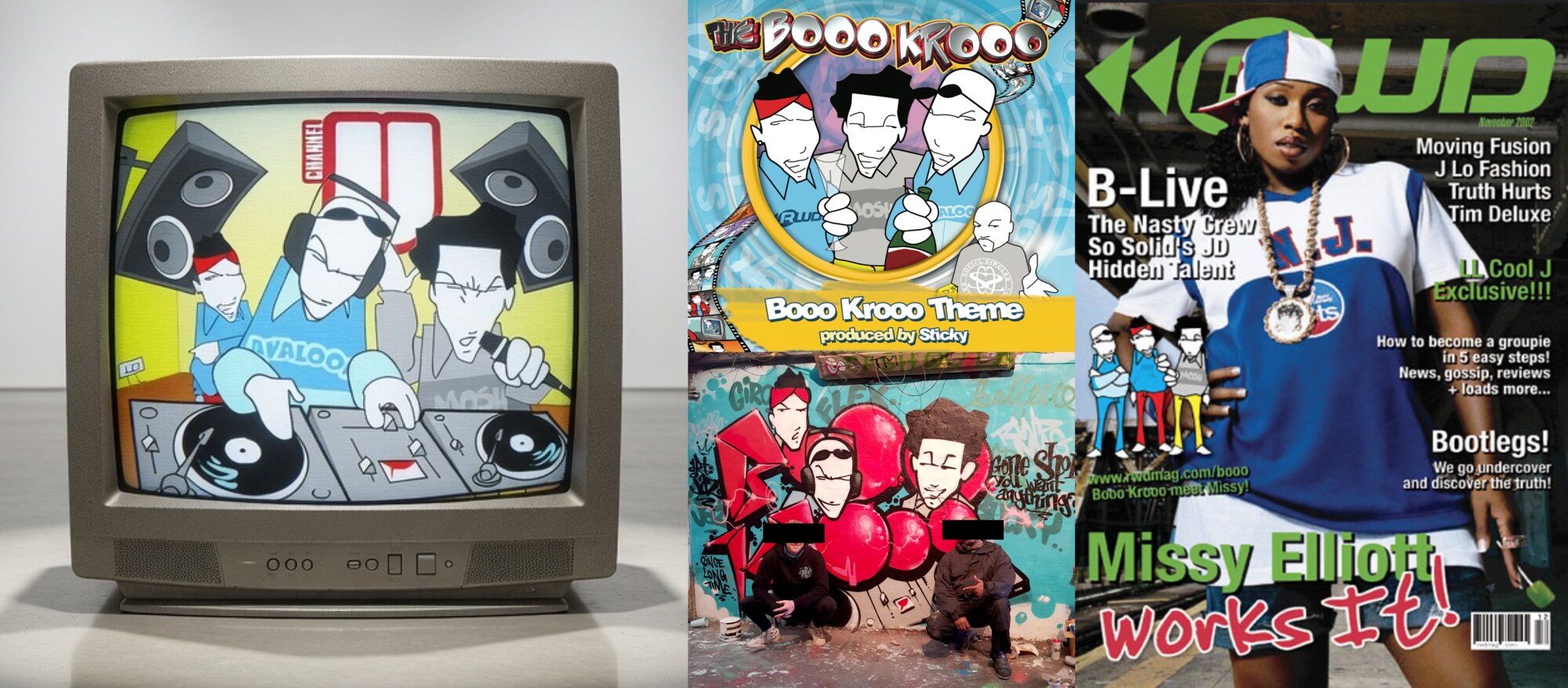
A comic strip in the magazine became The Booo Krooo — three MCs from pirate station "Dunce FM," trying to get famous, get girls, or save the world. What began as an April Fools' joke and a 3-episode web series became a 9-episode animated sitcom on Channel U, produced with Julian "ArtJaz" Johnson and Matt Mason — "garage's answer to Gorillaz," said Muzik. Missy Elliott's UK campaign for "Work It" insisted on featuring it, then sent it to her own fanbase, putting a bedroom project in front of millions. Prince Charles commissioned it for the Prince's Trust Urban Music Festival, on a bill with Jay-Z, Beyoncé and a young Dizzee Rascal. In 2026 it entered the BFI National Archive.
The Booo Krooo — the exact piece now held in the BFI National Archive, its theme by Sticky, the mural it became, and the Missy Elliott cover.
"Who does the animations?" — HRH King Charles III, 2004
"essentially a proto version of People Just Do Nothing"
The Ransom Note, 2017, on The Booo Krooo
05Brands
Aligning brands before they understood it
I built the bridge between brands and the culture before the brands knew they needed it — adidas adiZones and "About to Blow," pairing athletes with unsigned artists like Tinie Tempah before he was famous, and events with Kano, Wiley, Skepta and Ghetto, alongside campaigns for Sony PlayStation, Rockstar Games and Universal Music. Spotting it early, again.
adidas adiZones, the Slam Van, and the Kano launch — brand campaigns built from inside the culture.
adiZones was commissioned through the Mayor of London's office as part of the 2012 Games. Some early concepts came back from approval too edgy and had to be toned down before release — a reminder of how far the culture had moved from where a mayor's office sat.
Act Three — The legacy
062010 · DECA10
The documentary
Ten years on, the culture had a history. DECA10 documented it, told by the people who built it — Roll Deep, Ms Dynamite, Tinchy Stryder, Heartless Crew and more — made while the memories were still first-hand.
DECA10, 2010 — the culture, documented.
Faces from the decade DECA10 set out to document, and De×ca's tenth-anniversary campaign.
Behind the ten-year celebration and event.
072026 · BFI
Now in the National Archive
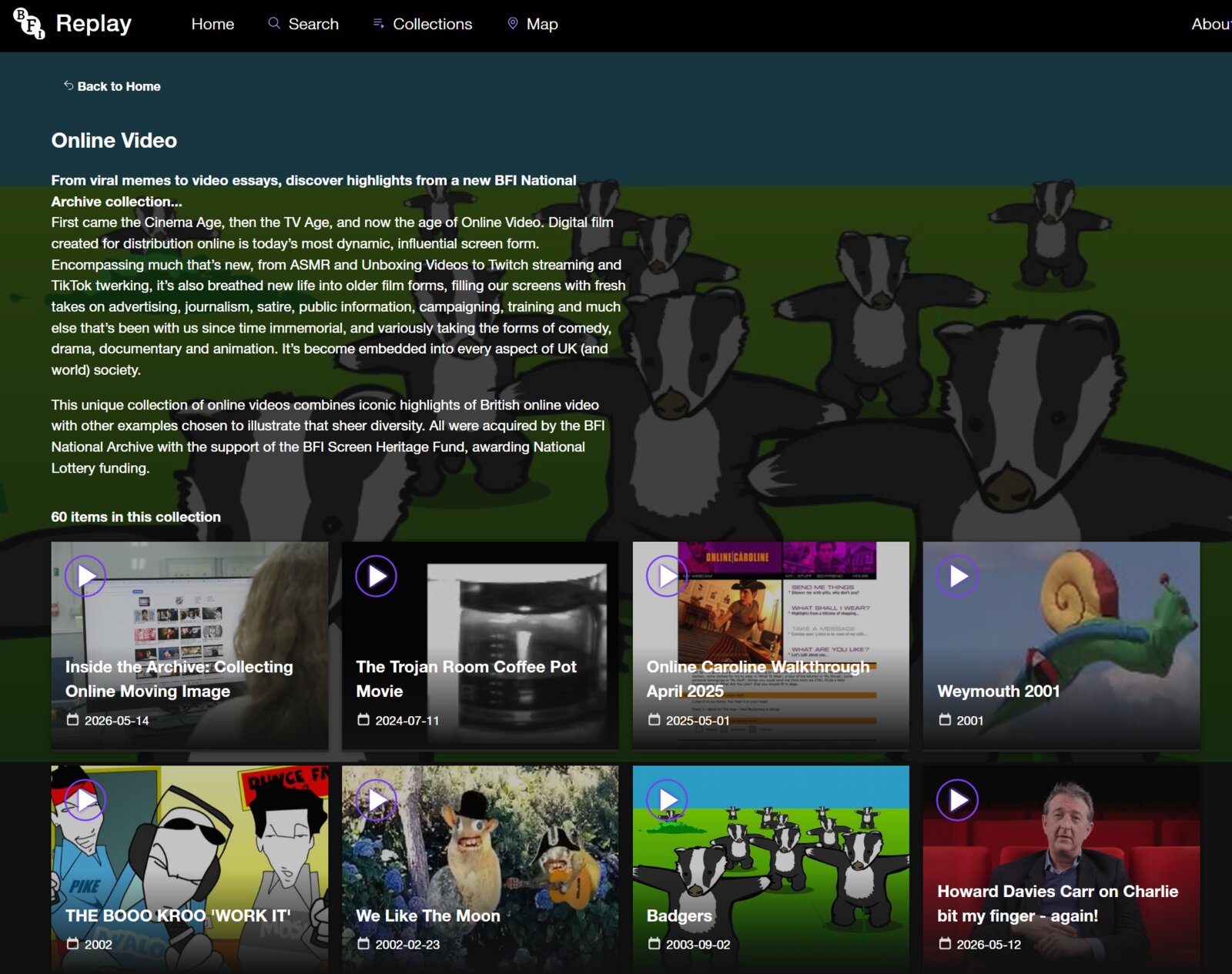
In 2026 The Booo Krooo — the animation that grew out of the site — entered the BFI National Archive, in the Online Video collection, alongside the defining works of early British internet culture: the Trojan Room coffee pot, Badgers and Charlie Bit My Finger. What started in a bedroom is now held as history. Still referenced today.
BFI Replay — Online Video collection, 2026. View on BFI Replay